
Written by: Crystal Williams, Ph.D.
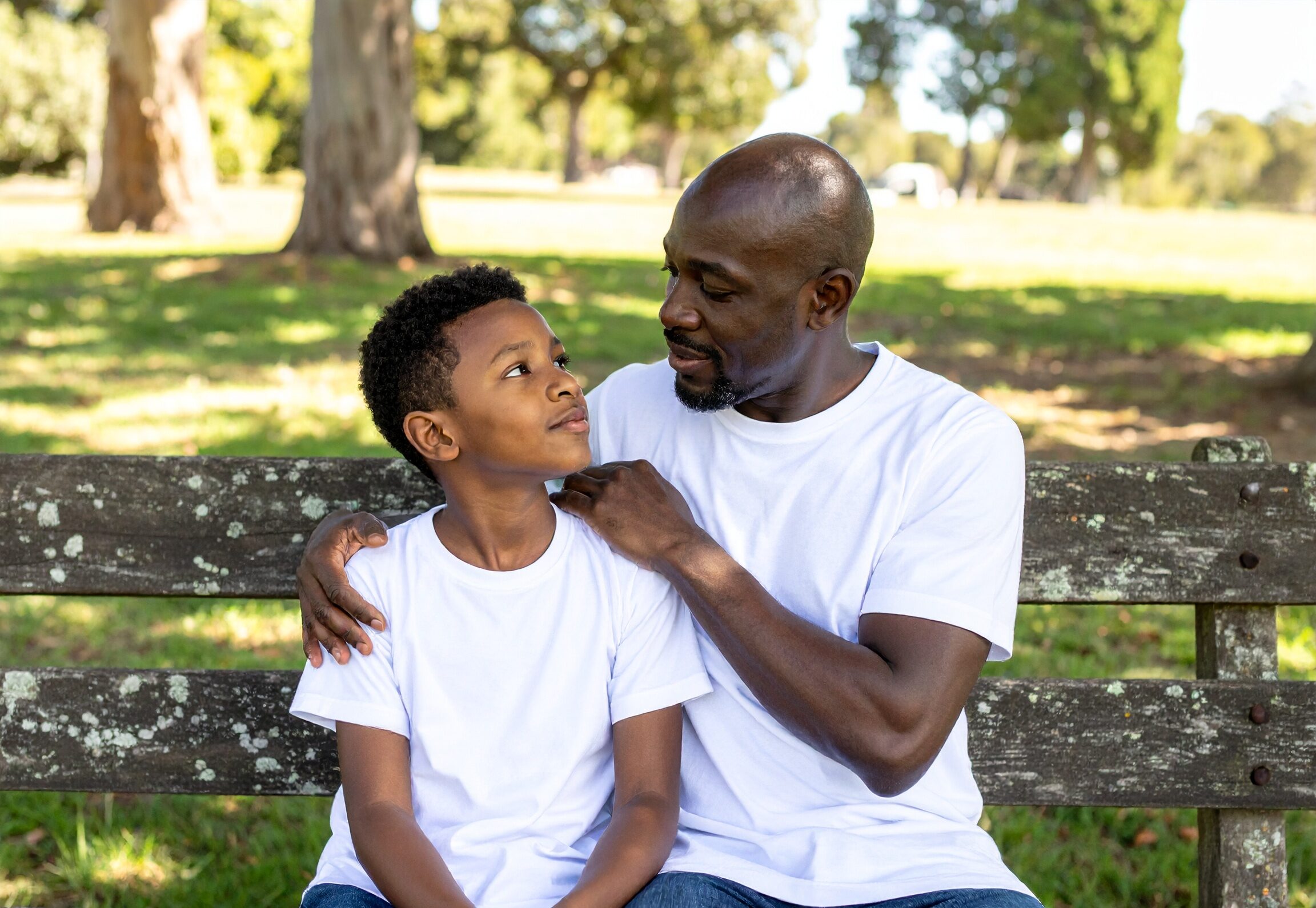
Fathers play a significant role in the development and academic achievement of their children in the elementary years. However, male caregivers’ engagement in their children’s education and learning is not as common as mothers’ engagement. School personnel have a responsibility to scaffold fathers’ engagement in their children’s lives, which can set both families and children up for success.
The Role of Fathers in Development and Learning
Fathers play a unique role in the development and academic success of their children with and without disabilities. Research shows that male caregivers of children with and without disabilities engage in their children’s development and learning in both formal and informal ways (Herbard, 2017; Potter, 2016), including:
- Contributing to placement decisions
- Helping children get ready for school
- Attending school meetings
- Assisting with homework and reading skills
- Participating in school governance and organizational groups
- Communicating with teachers
- Engaging in learning during play and activities (e.g., sports, vacation)
- Engaging in conversation and asking questions
Moreover, in a meta-analysis by Jeynes et al. (2015), the authors found that there was a strong relationship between male caregiver involvement and children’s outcomes, especially in the preschool and elementary years. The study suggests that broadly defined father involvement most significantly impacts children’s behavior and psychological well-being, with health outcomes and academic achievement having a smaller impact. Despite the benefits of father involvement, fathers tend to be less engaged in their child’s education than mothers across different types of involvement (e.g., at school, at home; Kim, 2017).
Barriers to Father Involvement in Elementary School
There are several documented barriers to father involvement for both children with and without disabilities, including:
- Work Obligations: Male caregivers report that work responsibilities (including military involvement) prevent them from being involved in educational activities (Hebrard, 2017; Noggle et al., 2024; Potter, 2016)
- Unawareness: Fathers have reported being unaware of activities at their child’s elementary school meant to engage dads (Hebrard, 2017)
- Teacher communication: Many male caregivers perceive that teachers communicated minimally with them and in more passive ways (e.g., newsletters, informational material, through their wives), rather than using direct communication (Hebrard, 2017; Levine, 1993)
- Teacher expectations and attitudes: Many teachers perceive that father involvement should occur inside the school (e.g., volunteering, celebrations, conferences), although many dads reported being involved in other ways such as promoting learning on the weekend or vacation and during daily interactions with their children (e.g., asking questions, reviewing a child’s folder, dinner table talk; Hebrard, 2017). Moreover, fathers have reported feeling like their views and experiences were not valued, particularly in the special education system (Potter, 2016).
- Discomfort: Some male caregivers may feel uncomfortable around school staff (Levine, 1993; McBride & Rane, 1997), particularly because it is a predominantly female field (Noggle et al., 2024)
Strategies that Support Father Involvement in Elementary School
- Gain access to dads through mothers. In a systematic review, Kim (2017) found that there is a strong relationship between mother and father involvement, suggesting that when a mother is more involved, a child’s male caregiver is more likely to be involved too! School personnel can leverage this by asking mothers questions about father figures in the child’s life, inviting both caregivers to attend events, and providing ideas about how the caregivers can be involved, given limitations such as work, childcare responsibilities, etc.
- Tailor communication to all relevant caregivers. In Hebrard’s (2017) study, fathers reported wanting to feel more welcome by their children’s elementary teachers and to have more advanced notice of school events/activities. School personnel can also use multiple modes of communication to share information (e.g., text, Class Dojo, in-person, phone call), rather than relying on more passive communication. Finally, school personnel must ensure they are not directing all communication to/through the mother. For example, if a mother and father are present, personnel should ensure they make eye contact, ask questions, and build rapport with both caregivers.
- Acknowledge and scaffold all forms of father engagement. Fathers engage in their children’s development and learning in ways that may be unseen by school personnel (Hebrard, 2017; Potter, 2016). School personnel can scaffold fathers’ preferred types of engagement by inviting dads to complete a questionnaire about how they engage with their children. Personnel can then provide additional support that meets male caregivers where they are, such as sending home dinner conversation starters that align with school content or designing father-child take-home activities that address academic objectives.
- Invite fathers to help co-design opportunities for engagement. In a review of fatherhood interventions, Henry et al. (2020) found that father-child interventions are more effective when co-designed with male caregivers. Moreover, elementary school dads in Hebrard’s (2017) qualitative study reported that they wanted more opportunities to engage, sharing ideas such as a desire to help develop events/programs specific to dads and inviting fathers to serve in ways that meet their strengths (e.g., landscaping, manual labor).
- Provide meaningful professional development opportunities for elementary school personnel related to father involvement. Noggle et al. (2024) found that elementary school personnel were positively impacted by a 5-part virtual book club professional development, in terms of their work with male caregivers. The researchers used the book One of Us by Mark Olsteen (2010), which is written from the perspective of
Conclusion
There is a need for greater involvement of fathers in their children’s elementary education to enhance children’s developmental outcomes. Father engagement in their children’s growth and learning may look different from what school personnel typically expect. Thus, it is important to intentionally work with male caregivers to determine how they prefer to engage, and use that as a starting point to enhance father involvement.
Reflective Questions:
- What are the seen and unseen ways that fathers engage in elementary students’ growth and learning?
- How do you currently help fathers feel welcome in your educational setting? What could you do to improve your openness to their engagement?
- How do you promote diverse ways of engagement for parents, particularly fathers? What else could you do?
References
Hebrard, M. J. (2017). The perceptions of father involvement in elementary schools (Publication No. 3291). [Doctoral dissertation, East Tennessee State University]. Electronic Theses and Dissertations.
Henry, J. B., Julion, W. A., Bounds, D. T., & Sumo, J. (2019). Fatherhood matters: An integrative review of fatherhood intervention research. The Journal of School Nursing, 36(1), 19–32.
Jeynes, W. H. (2015). A meta-analysis: The relationship between father involvement and student academic achievement. Urban Education, 50(4), 387–423.
Kim, S. W. (2018). How and why fathers are involved in their children’s education: Gendered model of parent involvement. Educational Review, 70(3), 280–299.
Levine, J. A. (1993). Involving fathers in Head Start: A framework for public policy and program development. Families in Society, 74, 4–21.
McBride, B. A., Schoppe-Sullivan, S. J., & Ho, M. H. (2005). The mediating role of fathers’ school involvement on student achievement. Journal of Applied Developmental Psychology: An International Lifespan Journal, 26, 201–216.
Noggle, A. K., & Hooks, S. D. (2024). Father involvement in a comprehensive elementary school: Building capacity and understanding. PDS Partners: Bridging Research to Practice, 19(1), 68–87.
Potter, C. (2016). “It’s the most important thing – I mean, the schooling”: Father involvement in the education of children with autism. European Journal of Special Needs Education, 31(4), 489–505.
Image Credit: Adobe Firefly (AI)